
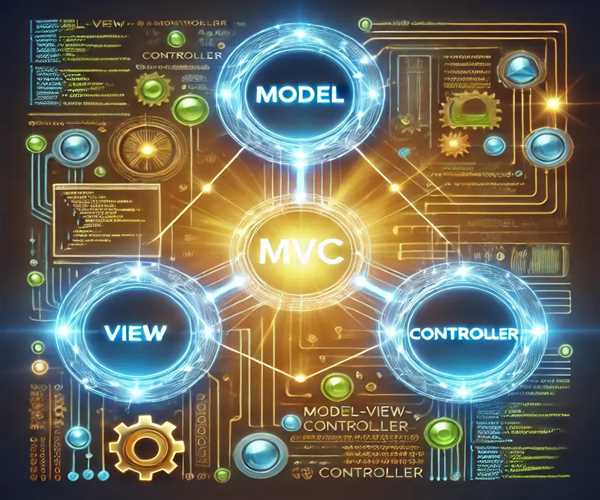
The Model-View-Controller (MVC) architecture is a strong design pattern that is widely applied in web development. This architecture divides concerns into three interconnected components: model, view, and controller, where each one plays a different role in managing data, user interactions, and rendering outputs. Here's how the client side and server side interact seamlessly in MVC.
This article goes into the interaction between client-side and server-side components within the Model-View-Controller (MVC) architecture. It explores their roles, responsibilities, and the flow of data to create efficient, scalable, and user-friendly web applications.
Introduction to MVC architecture
Model-View-Controller, also known as MVC, is one of the most widely used software architecture models that separate application logic into three related components:
- Model: This manages the data, logic, and rules of the application.
- View: Shows the data (UI) that the user has access to.
- Controller: changes the input, converts it to a command for the model, and updates the view.
This separation increases scalability, maintainability, and testability. Communication between client side and server side in MVC is essential for modern web applications, especially with the rise of single-page applications (SPAs).

Roles of Client-Side and Server-Side in MVC
1. Client-Side in MVC
This facet is administered inside the browser and allows interactivity, responsiveness, and dynamic content updating. It has key features such as:
- Rendering Views: Current JavaScript frameworks, as examples, React, Angular, and Vue.js power consumer-side rendering dynamic views.
- Handling Interactions Here, events such as clicks, form submissions, and API calls are serviced, bringing instant feedback to the users.
- Validation: Ensures input accuracy before data reaches the server, improving the user experience and reducing server load. Learn more about client-side validation and its benefits.
2. Server-side in MVC
The server part runs on the web server for processing requests, doing business logic, and talking to databases. Its responsibility includes data management, which comprises communication with databases, storage, retrieval, and updating.
- Business logic: central processing for guaranteeing uniformity among users.
- Session management: It manages the user sessions and also deals with secure connections, as explained in Session Management in ASP.NET MVC.
3. API calls
- In SPAs, the customer requests the server to add or update its statistics via API.
- The server returns based information (as an example, JSON) that the consumer will use to dynamically replace the size to keep software state.
Interaction Between Client Side and Server Side in MVC
1. Data Flow
Data streams in two ways:
- From Client to Server: The user inputs, for example, form information, are submitted over HTTP requests. Most of the time, these requests hit RESTful APIs for dependent statistics trading.
- From Server to Client: the server techniques facts at the same time, sending responses back in real-time through JSON typically as a replacement for the consumer interface.
2. Communication Mechanisms
- AJAX Calls: It enables asynchronous exchange of records without refreshing the page, which is very important for smooth patron reviews.
- APIs: REST APIs are the bedrock of patron-server interaction in MVC frameworks like ASP.NET MVC.
3. Shared responsibilities
The controller is a bridge between the customer and server, decoding the user's moves and orchestrating the flow of records. The CRUD operations in MVC are appropriate examples of how controllers manipulate purchaser-server interactions.
Advantages of Client-Server Interaction in MVC
- Better Performance: Offloading the job to the customers for UI rendering from the server reduces processing on the server.
- Scalability: separation permits teams to one after the other optimize customer-side and server-aspect additives.
- Improved User Experience: Real-time updating on the customer facet reduces latency and improves responsiveness.
Challenges and Mitigation
1. Overhead Management
Rendering to the consumer can be very deep. Proper optimization, which includes caching and lazy loading, can mitigate this.
2. Data Security
Sensible operations and validations must originate on the server to prevent security vulnerabilities.
3. Cross-Browser Compatibility
The same performance needs to be ensured for a particular set of browsers with adequate testing and fallback mechanisms.
Real-Life Scenario's SPAs:
- Use the MVC on the client side for interactions and the server side to manage data-commerce websites.
- Use MVC in inventory updates, user authentication, and personalized views.
CMS
- Use MVC to effectively deal with data and dynamic content rendering.
Conclusion
The interplay between the consumer-side and server-side of MVC frameworks forms the crux of responsive and efficient net applications. With the former focused on presentation and interactivity, the latter focuses on data integrity and enforcement of business logic. Together, they come up with smooth, scalable applications for modern-day users.
To get similarly profound insights into MVC frameworks, try articles such as Client-Side vs. Server-Side Validation or Server-Side Programming Essentials.
This structured evaluation helps in recognizing how MVC uses customer-server interaction for optimized development of software.


Leave Comment